

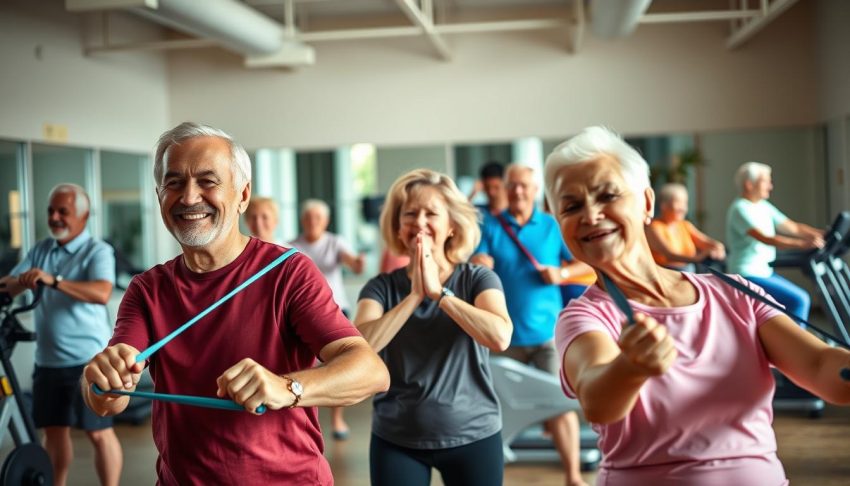
As we age, maintaining physical activity becomes crucial for our overall health and wellbeing. Regular exercise can help mitigate age-related health issues, improve mobility, and enhance the quality of life for seniors.
Engaging in older adult exercise can significantly reduce the risk of chronic diseases, such as heart disease and diabetes. Moreover, physical activity for seniors can improve mental health by reducing stress and anxiety.
Key Takeaways
- Regular physical activity improves overall health and wellbeing.
- Exercise can mitigate age-related health issues.
- Physical activity reduces the risk of chronic diseases.
- Exercise improves mental health by reducing stress and anxiety.
- Staying active enhances mobility and quality of life.
The Importance of Physical Activity for Seniors
Regular physical activity is essential for seniors to mitigate age-related physical changes and improve their quality of life. As individuals age, they undergo various physical changes that can impact their overall health and wellbeing.
Age-Related Physical Changes
Aging is associated with several physical changes, including loss of muscle mass and strength, as well as a reduction in bone density.
Muscle Mass and Strength Loss
The loss of muscle mass and strength, known as sarcopenia, can lead to decreased mobility and increased risk of falls. Resistance training can help mitigate this loss by building and maintaining muscle mass.
Bone Density Reduction
A reduction in bone density increases the risk of osteoporosis and fractures. Weight-bearing exercises can help maintain bone density and reduce this risk.
Health Benefits of Regular Exercise
Engaging in regular physical activity provides numerous health benefits for seniors, including improved cardiovascular health and enhanced cognitive function.
Improved Cardiovascular Health
Regular exercise helps maintain a healthy heart by improving circulation, reducing blood pressure, and decreasing the risk of heart disease.
Enhanced Cognitive Function
Physical activity has been shown to improve cognitive function and reduce the risk of dementia in older adults.
Overcoming Common Barriers to Fitness
Despite the benefits, many seniors face barriers to engaging in physical activity, such as health concerns or lack of motivation. Consulting with healthcare providers and finding enjoyable activities can help overcome these barriers.
Getting Started: Safety First Approach
Consulting with healthcare professionals is a vital step for seniors before diving into a new exercise routine. This initial consultation helps identify potential health risks and ensures that the chosen exercises are appropriate for the individual’s health status.
Consulting Healthcare Providers Before Beginning
A healthcare provider can offer personalized advice based on the senior’s medical history, current health conditions, and fitness goals. This consultation is crucial for creating a safe and effective exercise plan.
Understanding Your Physical Limitations
Recognizing one’s physical limitations is essential to prevent injuries and avoid overexertion. Seniors should be aware of their body’s signals and stop or modify exercises as needed.
Essential Equipment for Senior Fitness
Having the right equipment can enhance the safety and effectiveness of a senior’s fitness routine. This includes proper footwear, comfortable clothing, and supportive gear for joint protection.
Proper Footwear and Clothing
Choosing the right footwear and clothing can significantly impact the comfort and safety of exercise. Seniors should opt for supportive shoes and breathable, comfortable clothing.
Supportive Gear for Joint Protection
Supportive gear, such as knee or elbow braces, can provide additional protection for joints during exercise. This is particularly beneficial for seniors with joint issues or chronic pain.
Fitness Programs for Older Adults
Fitness programs designed for older adults offer a range of benefits, from improved physical health to enhanced mental wellbeing. These programs are tailored to meet the specific needs and capabilities of seniors, ensuring a safe and effective way to stay active.
Community-Based Senior Exercise Classes
Community-based senior exercise classes provide a social and supportive environment for older adults to engage in physical activity. These classes are often held in local community centers, senior centers, or retirement communities, making it easy for participants to attend. They typically include a variety of exercises such as stretching, strengthening, and cardiovascular activities.
Silver Sneakers and Similar Programs
Silver Sneakers is a popular fitness program designed for older adults, particularly those with Medicare insurance plans. It offers access to a network of fitness centers and community-based classes, providing a range of exercise options. Similar programs include Renew Active and Silver&Fit, which also offer fitness benefits and resources tailored to seniors.
Online Fitness Resources for Seniors
The rise of digital technology has made it easier for older adults to access fitness resources from the comfort of their own homes. Online fitness resources include virtual classes and YouTube channels that cater specifically to seniors.
Virtual Classes Designed for Older Adults
Virtual fitness classes designed for older adults offer the convenience of exercising at home while still benefiting from structured workout programs. These classes are often led by experienced instructors who modify exercises to accommodate different fitness levels and health conditions. Some popular virtual class options include:
- Chair yoga and chair aerobics
- Low-impact aerobics
- Strength training with light weights or resistance bands
YouTube Channels with Senior-Friendly Workouts
YouTube has become a valuable resource for older adults looking for exercise videos that cater to their needs. Channels such as BoFit and NASM offer a variety of workouts, from gentle stretching to more vigorous strength training. These videos are easily accessible and can be replayed as many times as needed.
By exploring these fitness programs, older adults can find activities that suit their preferences and fitness goals, helping them maintain an active and healthy lifestyle.
Cardiovascular Exercises for Heart Health
Older adults can greatly benefit from cardiovascular exercises that are designed to improve heart health and reduce the risk of cardiovascular diseases. Engaging in regular physical activity not only enhances cardiovascular health but also improves overall wellbeing.
Walking Programs for Seniors
Walking is one of the simplest and most effective cardiovascular exercises for seniors. It is low-impact, making it ideal for those with joint issues or other mobility limitations.
Mall Walking Groups
Joining a mall walking group can be a great way to stay motivated and socialize while exercising. Many malls have designated walking programs for seniors.
Progressive Walking Plans
A progressive walking plan involves gradually increasing the distance, speed, or intensity of walks over time. This can help improve cardiovascular health and build endurance.
Swimming and Water Aerobics
Swimming and water aerobics are excellent cardiovascular exercises that are easy on the joints. They provide a full-body workout and can be adapted to different fitness levels.
Cycling Options for Older Adults
Cycling is another effective cardiovascular exercise that can be done both indoors and outdoors. It improves heart health and strengthens leg muscles.
Stationary Bikes
Stationary bikes are a convenient option for those who prefer exercising at home or in a gym. They allow for controlled intensity and are easy to use.
Recumbent Bicycles
Recumbent bicycles offer a comfortable seating position and are ideal for those with back issues or other comfort concerns.
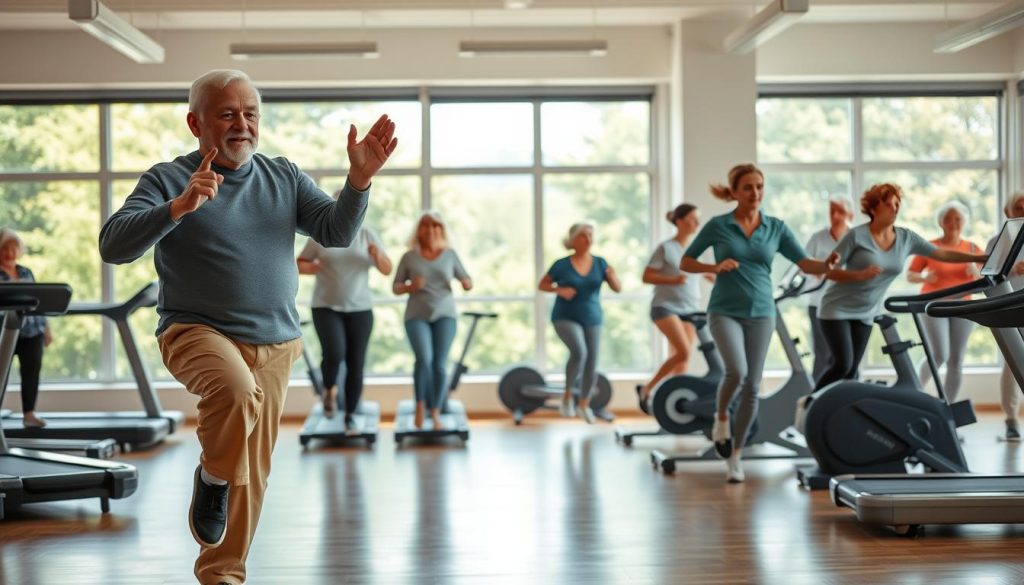
Incorporating these cardiovascular exercises into a regular fitness routine can significantly improve heart health and overall quality of life for older adults.
- Walking: Improves cardiovascular health and is low-impact.
- Swimming: Provides a full-body workout and is gentle on joints.
- Cycling: Strengthens leg muscles and improves heart health.
Strength Training to Maintain Muscle Mass
As people age, engaging in regular strength training exercises can help maintain muscle mass, reduce the risk of falls, and improve mobility. This form of exercise is crucial for older adults to preserve their independence and enhance their overall quality of life.
Bodyweight Exercises for Beginners
Bodyweight exercises are an excellent starting point for seniors who are new to strength training. These exercises utilize the individual’s weight as resistance and can be modified to suit different fitness levels.
Chair Squats and Modified Push-ups
Chair squats are a great way to strengthen the legs, while modified push-ups can help improve upper body strength. Both exercises can be adapted to accommodate physical limitations.
Core Strengthening Exercises
Core strengthening exercises, such as seated marching or leg raises, can help improve balance and stability. These exercises are essential for preventing falls and maintaining overall core strength.
Resistance Band Workouts
Resistance band workouts offer a versatile and low-impact way to improve strength. These bands come in various resistance levels, making them suitable for a wide range of fitness levels.
Light Weight Training Techniques
Proper Form and Safety Guidelines
When engaging in light weight training, it’s essential to focus on proper form and safety guidelines to avoid injury. This includes starting with light weights and gradually increasing the load as strength improves.
Progressive Resistance Training
Progressive resistance training involves gradually increasing the intensity of workouts to continue challenging the muscles. This approach is key to maintaining muscle mass over time.
By incorporating these strength training techniques into their fitness routine, older adults can significantly improve their muscle mass, overall health, and wellbeing.
Balance and Flexibility Exercises to Prevent Falls
Balance and flexibility exercises are essential for older adults to reduce the risk of falls and improve their quality of life. As we age, our bodies undergo natural changes that can affect our balance and flexibility, making us more susceptible to falls. Engaging in regular exercises that focus on balance and flexibility can help mitigate this risk.
Yoga for Seniors
Yoga is a highly beneficial activity for seniors, offering a range of benefits including improved flexibility, balance, and strength. It can be modified to suit different fitness levels, making it accessible to most older adults.
Chair Yoga Options
For those with mobility issues or who are new to yoga, chair yoga is an excellent starting point. It involves performing yoga poses while seated or using a chair for support, making it a safe and enjoyable way to improve flexibility and balance.
Gentle Stretching Sequences
Gentle stretching sequences are another aspect of yoga that can be particularly beneficial for seniors. These sequences help improve flexibility and can be done at a pace that feels comfortable for the individual.
Tai Chi Benefits for Older Adults
Tai chi is a traditional Chinese martial art that has been adapted into a low-impact, slow-moving exercise that is highly beneficial for older adults. It improves balance, flexibility, and strength, while also reducing stress and improving overall wellbeing.
Simple Daily Balance Exercises
In addition to yoga and tai chi, there are several simple daily balance exercises that seniors can incorporate into their routine.
One-Leg Stands with Support
One-leg stands are a simple yet effective balance exercise. Using a chair or wall for support, stand on one leg while keeping the other foot lifted off the ground. This exercise helps improve balance and stability.
Heel-to-Toe Walking Practice
Heel-to-toe walking is another exercise that can help improve balance. It involves walking in a straight line, placing the heel of one foot directly in front of the toes of the other foot. This exercise requires concentration and can significantly improve balance over time.
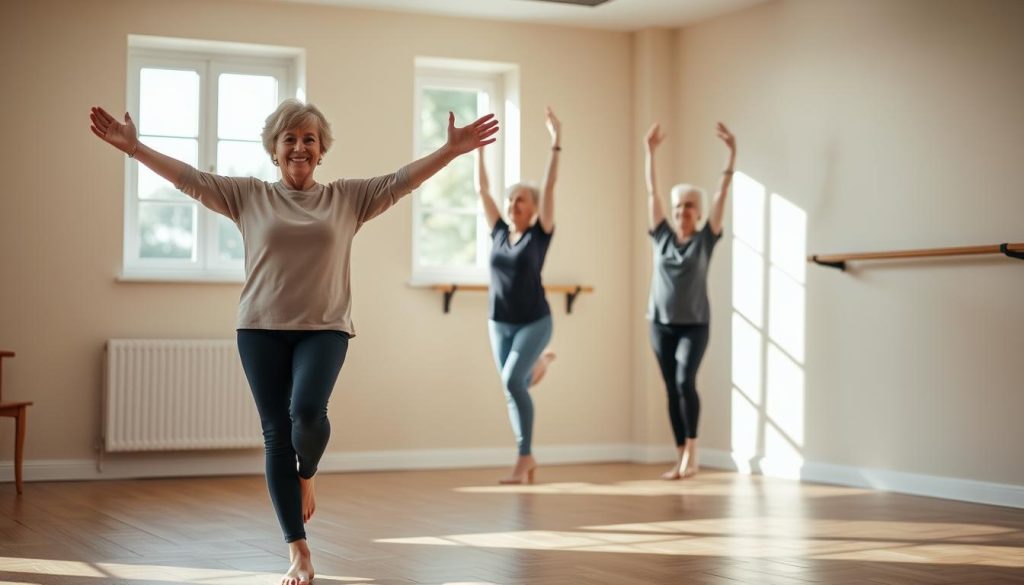
By incorporating these balance and flexibility exercises into their daily routine, older adults can significantly reduce their risk of falls and maintain their independence.
Adapting Exercises for Common Health Conditions
Exercise adaptation is crucial for seniors dealing with health conditions like arthritis and osteoporosis. As people age, they may encounter various physical limitations that necessitate modifying their exercise routines to ensure safety and effectiveness.
Arthritis-Friendly Movement Patterns
For individuals with arthritis, it’s essential to choose exercises that are gentle on the joints. Low-impact activities such as swimming, cycling, and using resistance bands are excellent options. These exercises help maintain joint mobility without causing excessive strain.
- Swimming and water aerobics
- Cycling on a stationary bike
- Resistance band exercises
Exercises for Osteoporosis Prevention
Osteoporosis prevention requires exercises that improve bone density. Weight-bearing activities such as walking, dancing, and weight training are beneficial. It’s also important to include exercises that enhance balance to prevent falls.
- Brisk walking
- Dancing
- Light weight training
Modifications for Cardiovascular Conditions
For seniors with cardiovascular conditions, it’s crucial to follow heart-safe exercise guidelines. This includes monitoring intensity levels and avoiding extreme temperatures.
Heart-Safe Exercise Guidelines
Seniors should start with low-intensity exercises and gradually increase the intensity based on their comfort and health provider’s advice.
Monitoring Intensity Levels
Using the talk test can help monitor exercise intensity. If you can still hold a conversation, the intensity is likely appropriate.
By adapting exercises to accommodate common health conditions, seniors can maintain their physical health and independence. It’s always recommended to consult with a healthcare provider before starting any new exercise program.
Creating a Sustainable Fitness Routine
Establishing a sustainable fitness routine is crucial for older adults to maintain their health and wellbeing. A well-structured exercise plan can help seniors stay active, improve their quality of life, and reduce the risk of chronic diseases.
Setting Realistic Goals
The first step in creating a sustainable fitness routine is to set realistic goals. This involves assessing your current fitness level and identifying achievable targets. For example, if you’re new to exercise, starting with short walks and gradually increasing the duration can be a great way to begin.
Building a Weekly Exercise Schedule
A weekly exercise schedule helps in maintaining consistency. It’s essential to balance different types of exercises, including cardiovascular activities, strength training, and flexibility exercises. For instance, you might dedicate three days to cardio, two days to strength training, and one day to flexibility exercises.
Balancing Different Types of Exercise
Balancing various forms of exercise is vital to avoid overtraining and prevent injuries. Cardiovascular exercises like walking or swimming improve heart health, while strength training helps maintain muscle mass. Flexibility exercises, such as yoga or tai chi, enhance balance and reduce the risk of falls.
Incorporating Rest Days
Rest days are just as important as exercise days. They allow your body to recover and rebuild, making your fitness routine more sustainable in the long term. Ensure you include at least one or two rest days in your weekly schedule.
Tracking Progress and Celebrating Achievements
Tracking progress is a great motivator. Keeping a fitness journal or using a mobile app can help you monitor your achievements. Celebrate your milestones, no matter how small, to stay motivated and engaged in your fitness journey.
Nutrition and Hydration for Active Seniors
Proper nutrition and hydration are crucial for active seniors looking to maintain their health and wellbeing. As people age, their nutritional needs change, and it’s essential to understand these changes to support overall health.
Protein Needs for Muscle Maintenance
Active seniors require adequate protein to maintain muscle mass. Protein-rich foods such as lean meats, fish, eggs, dairy products, and legumes should be included in their diet. The recommended daily intake of protein varies, but generally, seniors are advised to consume about 1.0 to 1.2 grams of protein per kilogram of body weight.
Hydration Strategies During Exercise
Staying hydrated is vital, especially during exercise. Seniors should drink water before, during, and after physical activity. Monitoring urine color is a simple way to check hydration levels; it should be pale yellow.
Signs of Dehydration to Watch For
- Dry mouth
- Fatigue
- Dizziness
- Dark urine
Electrolyte Balance Considerations
Electrolytes, such as sodium and potassium, are lost through sweat. For longer or more intense workouts, considering electrolyte-rich drinks or supplements can help maintain balance.
Balanced Diet for Energy and Recovery
A balanced diet that includes a variety of foods from all food groups is essential for energy and recovery. Whole grains, fruits, vegetables, lean proteins, and healthy fats should be staples.
By focusing on nutrition and hydration, active seniors can enhance their performance, support their health, and enjoy a better quality of life.
Conclusion: Embracing an Active Lifestyle at Any Age
Embracing fitness is a journey that can be started at any age, and it’s essential for older adults to prioritize their physical health to maintain an active lifestyle. By incorporating regular exercise and healthy habits into daily routines, seniors can significantly improve their overall wellbeing.
The fitness tips and programs outlined in this article provide a solid foundation for older adults to get started or continue their fitness journey. From cardiovascular exercises to strength training and balance exercises, there’s a wide range of activities that can be tailored to individual needs and abilities.
By adopting a sustainable fitness routine and making healthy lifestyle choices, older adults can enjoy improved physical and mental health, increased mobility, and a reduced risk of chronic diseases. Embracing an active lifestyle is a powerful step towards maintaining independence and enhancing overall quality of life.