

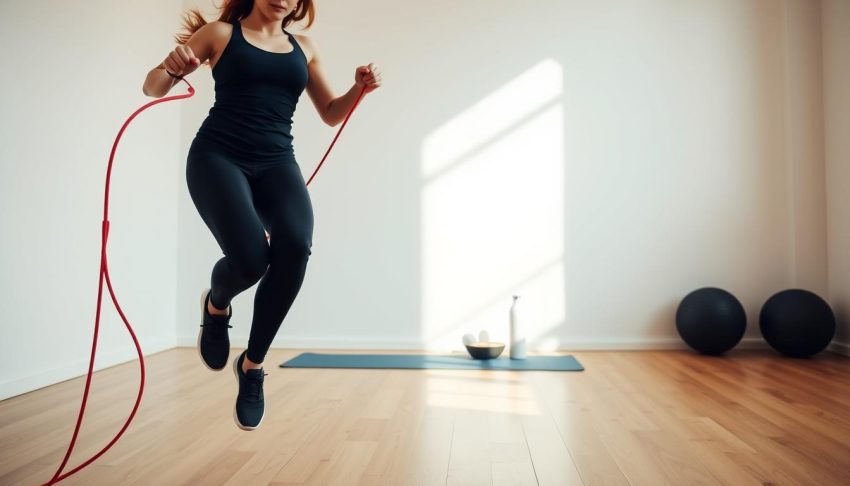
Ready to get moving? This short guide shows a clear way to start with a simple plan that fits busy lives. Many people think they must jump nonstop for 30 minutes. That idea can be tiring and puts new learners off.
Try brief intervals instead. Sets like 30 seconds on and 30 seconds off build skill and stamina without overwhelming you. Weighted cords help with rhythm and reduce tripping while you learn timing and footwork.
We’ll cover form cues, warm-ups, gear, and how to adjust length and speed so each session feels smooth. Apps and online communities release daily routines and coaching that keep progress steady and fun.
By the end, you will have a repeatable structure to track progress, scale sessions, and enjoy full-body gains in less time. This method boosts coordination, cardio, and calorie burn with portable gear and clear next steps.
Key Takeaways
- Short intervals (30s on/30s off) are effective and sustainable.
- Weighted rope options improve rhythm and lower trip risk.
- Focus on form, warm-up, and adjusting rope length for safety.
- Daily apps and communities provide routines and coaching.
- Sessions deliver cardio, coordination, and calorie burn in less time.
Why Jumping Rope Works: Key Benefits For Beginners
A simple single-tool routine delivers big gains in cardio, coordination, and full-body strength.
Total-body conditioning, coordination, and agility
Using a light cord challenges calves, hamstrings, quads, glutes, back, core, and forearms in one quick session.
This kind of training sharpens balance, timing, and footwork. New users often notice improved rhythm after only a few sessions.
Cardio, calorie burn, and bone density support
Because the rope cycles fast, heart rate rises quickly and you get efficient cardiovascular work in fewer minutes.
Research shows you can burn roughly 200–300 calories in about 15 minutes when you keep the turns steady.
The repetitive, weight-bearing action also supports bone density—studies link this kind of load to better lower-body bone health across age groups.

- Time-efficient cardio that boosts heart rate and fitness.
- Total-body engagement that improves strength and agility.
- Short sessions deliver meaningful calorie burn and bone support.
- Portable training that fits into any schedule for steady progress.
Safety First: How Beginners Can Protect Joints And Stay Consistent
Focus on posture and short efforts so your body adapts without pain or fatigue. If you have prior knee or ankle injury, check in with your physician or a physical therapist before you start. They can confirm whether a jump rope plan suits your body.
Keep landings gentle. Use the balls of your feet and limit each hop to about one to two inches. This minimizes force through the knees and ankles while you build timing and control.
Engage your mid-back and core to maintain a neutral spine. That posture helps the rope swing cleanly and prevents excess stress on joints as your heart rate rises.
- Start with short intervals and planned rest to avoid form breakdown and manage fatigue.
- Choose forgiving surfaces like rubber flooring or wood and wear supportive shoes with forefoot cushioning.
- Stop if you feel joint discomfort, reassess technique, and scale intensity or extend rest.
- Monitor lower-leg response over 24–48 hours and increase volume gradually each week.
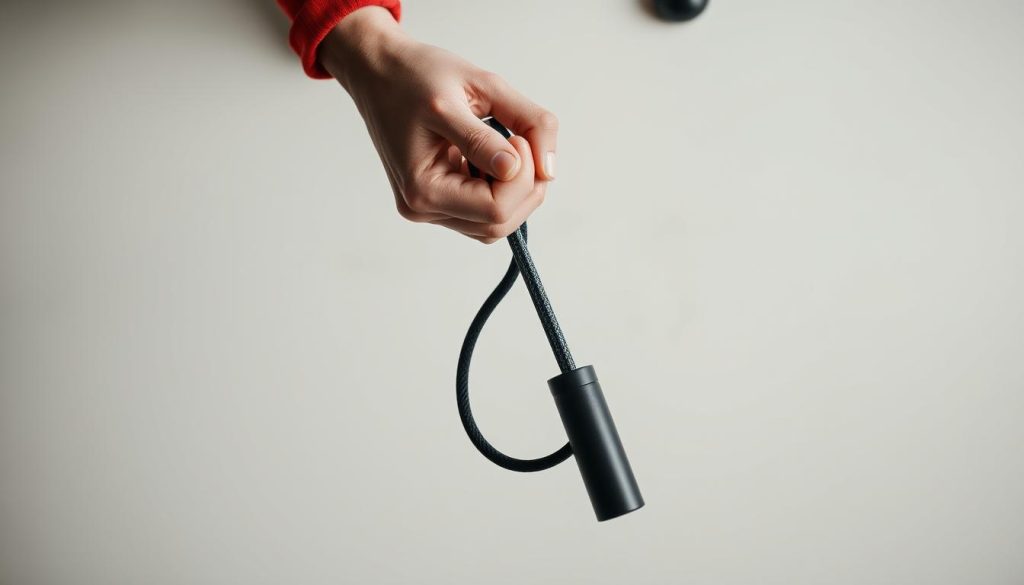
- When unsure, practice timing with ropeless handles until you are ready to add impact.
Getting Started Gear: Best Jump Rope Options And Sizing Tips
Pick gear that fits your body and goals to make early sessions safer and more fun.
Sizing matters. A quick check is to stand on the middle of the rope and pull the handles up. If the ends reach your armpits, the length is a reliable starting point.
Why a weighted option helps timing, rhythm, and feedback
A slightly weighted jump option (~0.5 lb or more) slows rotation and gives clear tactile feedback. That makes arc timing easier and cuts down on trips while you learn.
Handle position, rope length, and fit checks
Keep handles about 9–12 inches from your hips with hands at your sides. Drive the spin mainly with your wrists while keeping elbows and shoulders quiet.
Choosing ropes and handles for different sessions
- Weight placement: Prefer systems that put mass in the rope, not the handles.
- Interchangeable sets: Brands like Crossrope let you swap ropes for speed or power work.
- Handle feel: Choose grippy, comfy handles to avoid forearm fatigue and aid smooth rotation.
- Portability: Consider ropeless tools if space or noise is a concern.
Final tips: recheck length as your form improves. Lighter cords increase speed; heavier ones build power and give more feedback to refine timing.
How To Jump Rope With Proper Form
Nailing basic mechanics makes each session smoother and more effective. Start with a neutral spine and an engaged core so your form stays steady as you move. Stabilize through the mid-back and keep your head up to keep the path predictable.
Posture, wrist rotation, elbows, and shoulder positioning
Hold the handles lightly with your wrists near waist height and elbows slightly bent. Keep your shoulders relaxed and quiet so you rotate from the wrists, not the arms.
Drive the turn with small wrist snaps. Large shoulder circles slow the swing and cause trips.
Feet, knees, landing softly, and jump height
Stand with feet together or hip-width and hop from the balls of your feet. Limit each jump to about one to two inches to reduce impact.
Land softly with toes slightly pointed down and knees relaxed. Soft landings protect joints and let you keep a steady cadence.
Finding your rhythm and using mirror feedback
If timing feels off, swing the rope at your side without leaving the floor to feel the cadence. Then add small hops when the rhythm clicks.
Practice in front of a mirror to check hand position at your side and rope clearance. Listen for a steady tap on the floor; that sound confirms even rotation and helps the whole body sync up.
- Stand tall with ribs stacked over hips and gaze forward.
- Rotate from wrists; keep elbows tucked to avoid wobble.
- Keep low hops and soft landings to conserve energy.
Common Beginner Mistakes And Quick Fixes
Small technical errors often block steady progress and raise the chance of tripping during practice. Notice the pattern, then pick one correction to practice at a time. That keeps sessions focused and less frustrating.
Common movement faults
Focus on rhythm and economy of motion. Many learners double the hop per turn. This double-bounce stalls progress and makes higher speed hard to manage.
- One-hop rule: Aim for one hop per rotation—count “one hop, one turn” to lock cadence and reduce wasted height.
- Hands and elbows: Bring hands closer to the hips and quiet the elbows so the arc tightens and trips drop.
- Control speed: Slow wrist rotation slightly if you trip; build speed once your rhythm is steady.
- Practice drills: Use ghost swings and a slightly weighted rope as an option to feel timing without repeated mistakes.
- Short sets and rest: Use brief intervals with planned rest so technique stays crisp instead of slipping when tired.
Tip: If fatigue causes sloppy jumps, stop early and reset technique—clean reps beat extra, choppy reps every time.
Jump Rope Workout for Beginners
Short, clear sessions help you lock in rhythm and build confidence without burning out.
Option One: Simple intervals to master the basic jump
Plan: 30 seconds basic jump, 30 seconds rest. Repeat until you accumulate five minutes of active time.
Option Two: Tabata rounds to build skill and conditioning
Three Tabatas, each 4 minutes long:
- 20 seconds alternate-foot jump / 10 seconds rest ×8
- 20 seconds mountain climbers / 10 seconds rest ×8
- 20 seconds alternate-foot jump / 10 seconds rest ×8
Option Three: Mixed circuits with planks and side-to-side jumps
Repeat ×2: 30 seconds basic jump, 30 seconds rest, 30 seconds elbow plank, 30 seconds rest, 30 seconds side-to-side ski jumps.
- Start with Option One to groove timing and reduce trips.
- Use the seconds on / seconds off pacing to manage fatigue and keep form clean.
- Track total minutes and note misses; increase unbroken stretches before you add speed.
Alternative Beginner Workouts: Rep Ladders And Interval Ladders
Try ladder-style sessions to build rhythm and confidence while keeping fatigue manageable. These formats add variety and teach pacing in short, repeatable blocks.
Confidence-building rep ladder with short rests
Rep ladder plan: Set 1: 15 jumps, 30-second rest; Set 2: 25 jumps, 30-second rest; Set 3: 35 jumps, 30-second rest; Set 4: 25 jumps, 30-second rest; Set 5: 15 jumps, 30-second rest.
Why it works: The climb then descent teaches control under light fatigue and builds trust in timing.
Timed interval ladder: 30–60 seconds with equal rest
Time ladder plan: Two rounds of 30s work/30s rest, 45s/45s, 60s/60s, then 45s/45s, 30s/30s.
If you trip, resume and finish the target. Increase pace in later segments if early rounds felt easy.
- Short rests let you reset grip, posture, and breathing between sets.
- Repeat the time ladder to stack quality minutes and reinforce rhythm and technique.
- Use a slightly weighted cord option during training if timing feels off; it adds useful feedback.
Warm-Up And Cooldown: Prime Your Body, Recover Faster
A short, focused warm-up and a calm cooldown make each session safer and more effective.
Dynamic prep
Start with arm circles (10 forward, 10 backward) to wake the shoulders. Add calf raises (15) and toe curls (10) to prime the ankles and feet.
Finish the sequence with hip pulls (10 per side). These simple exercises increase range of motion and ready the body before you use the jump rope.
Cooldown resets
End your session with down dog while gently pedaling the knees for 30 seconds. Move into a half-kneeling hip flexor stretch (30 seconds) to ease the front hips.
Follow with a standing bent-over calf stretch (30 seconds each side) and a standing quad stretch (30 seconds each side). These steps help reduce tightness and protect knees over time.
- Quick tips: Do a few practice swings at your side to sync wrists and timing before the first set.
- Keep cooldown holds near 30 seconds to restore length without overdoing it.
- Use this warm-up and cooldown every session; consistent prep keeps ankles, knees, and the whole body happier and more durable.
Programming For Progress: Frequency, Rest, And When To Add Speed Or Weight
Set a clear weekly plan so skill and endurance grow without burnout. Aim for at least three jump rope sessions per week to build stamina and technique. Short, frequent sessions beat occasional long efforts.
Seconds first, minutes later. Start with seconds-based intervals (30s work/30s rest). Track total minutes as your longest unbroken set grows. Use simple heart rate awareness—stay in moderate zones while learning technique.
Cross-training and balance
Mix running, cycling, or strength training to round out fitness and protect overused tissues. Strength days help joint resilience and make faster sessions safer.
When to add speed or weighted jump options
Increase speed only when form and soft landings stay consistent. Introduce a weighted jump cord sparingly to add tactile feedback or build power once technique is steady.
Motivation and resources
Use an app for daily training plans and log minutes, trips, and longest streak. Join a community or trainer-led sessions for coaching and accountability.
- Plan three sessions weekly to develop rhythm without overreaching.
- Track minutes and longest streak as simple progress metrics.
- Adjust one variable at a time (duration, speed, or weight) to ensure steady gains.
Conclusion
You now have a clear plan to progress. Short, timed intervals and simple cues help turn clumsy attempts into steady skill. Keep wrists driving the rotation and elbows tucked while you land softly on the balls of your feet.
Use a slightly weighted option when timing feels off; it gives useful feedback and lowers trips. Warm up with arm circles, calf raises, and toe curls, then cool down with down dog and hip stretches to protect knees and calves.
Stick to the seconds-based sessions, track unbroken reps, and rotate circuits, Tabatas, and ladders to keep training fresh. With consistent practice and the right gear—like the best jump rope for your size—you’ll see real fitness gains and smoother sessions in little time.